

The Impact of Grinding Wheel Neglect on Roll Grinding Performance
In any rubber roller grinding operation, the condition of the grinding wheel directly affects productivity, surface finish quality, and operational safety. Even the most advanced roll grinding machines and elastomer grinding wheels cannot perform properly if the cutting surface of the wheel has become dull.
When tungsten-carbide grinding wheels become worn or neglected, the grinding process becomes inefficient and unstable. Many facilities unknowingly continue grinding with worn wheels, which can lead to a range of costly operational problems.
Common consequences of worn or neglected roll grinding wheels include:
-
Reduced material removal rates
-
Poor roller surface finish
-
Increased grinding heat and smoke
-
Higher machine power consumption
-
Greater risk of dust collector fires
-
Scrap parts and quality rejects
-
Lost production time and reduced profitability
Maintaining proper wheel condition is one of the most important steps in ensuring consistent performance during rubber roller grinding and elastomer roll resurfacing operations.
Dust Collector Fires
Low Production Rates
Quality Rejects
Lost Profit
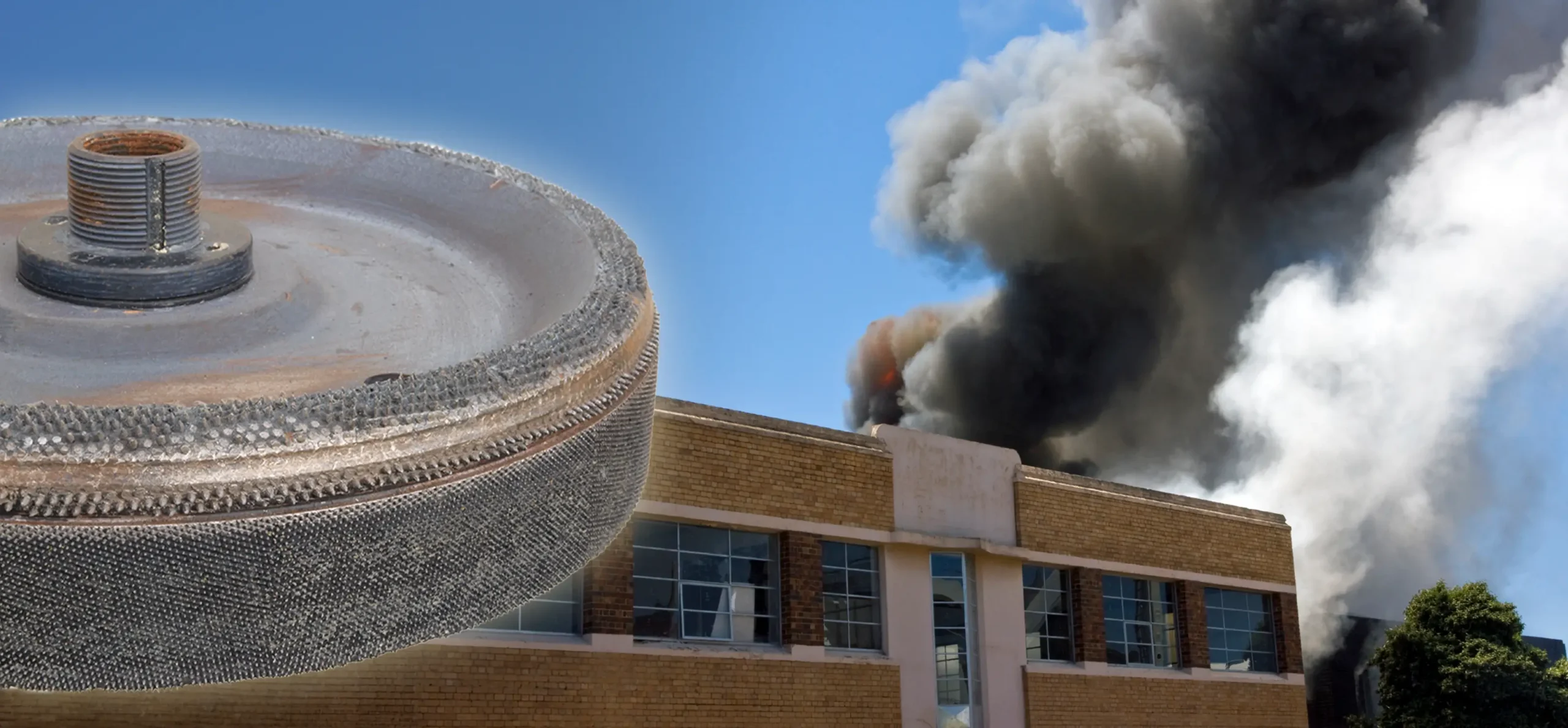
Improperly maintained grinding wheels can cause dust collector fires.
Maintaining Optimal Grinding Wheel Performance
At Oliver Carbide Products, we help customers maximize the performance of their Rubberhog® tungsten-carbide roll grinding wheels through proper inspection and maintenance practices.
Our technical booklet, How Worn is Worn Out, provides a detailed guide to identifying grinding wheel wear and maintaining peak performance in rubber roller grinding operations. Contact us for a complimentary copy.
Regular monitoring helps operators maintain high production rates, stable grinding conditions, and consistent roller surface finishes.
- Frequent visual wheel inspection
- Monitoring machine power consumption
- Monitoring griding temperature
- Maintaining detailed process records
- Replacing grinding wheels before performance deteriorates
Inspecting Tungsten-Carbide Grinding Wheels for Wear
Wheel wear is notable by the rounding or “blunting” of the conical teeth. Wear occurs most rapidly at the corner radii where the wheel sides and OD blend, and where the fine coating starts at the “step” between coarse and fine coatings on multiple-grit wheels. With the machine power locked out, rotate the wheel slowly by hand while inspecting the surface with a simple magnifier such as a folding “linen- tester” or a magnifying visor. The teeth, when new, are very sharp, with well-defined tips. Over time, dulling produces blunt-looking tips. The dulling is usually accompanied by an obvious increase in shininess, and the teeth will exhibit very little bite when stroked with your fingertips. Usually the change in bite is highly directional; running a fingertip in the direction of rotation, and then against it, will show a marked difference in aggressiveness. The photos below show magnified views of both MCM and SSG teeth in new and worn condition.

New SSG teeth

Worn SSG Teeth
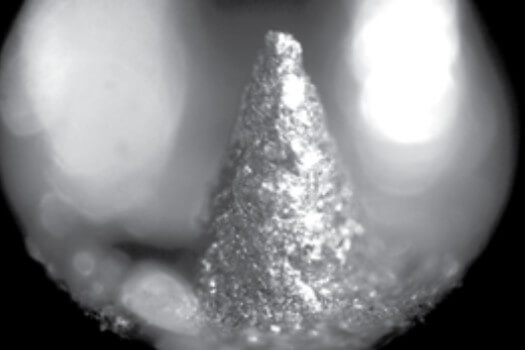
New MCM Teeth
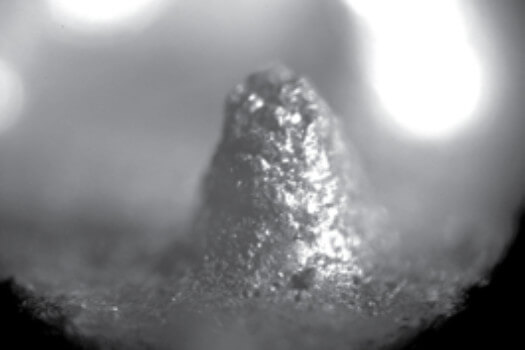
Worn MCM Teeth
Rubberhog Design Center
Rubberhog wheels are custom-designed and produced to match your machine and product requirements. Selecting and ordering the optimum Rubberhog for your application requires gathering information about your grinding equipment, the type of grinding jobs you perform, and the materials which you grind. There are four primary aspects of wheel design to consider: Physical dimensions, wheel style, coating type, and coarseness grade.