
Tungsten-Carbide Roll Grinding Technology for Rubber & Elastomer Rollers

Rubberhog® roll grinding wheels use brazed tungsten-carbide cutting teeth rather than conventional abrasives. This structured tooth design allows Rubberhog wheels to remove material faster, generate less heat, and maintain consistent cutting performance when grinding rubber rollers, polyurethane rollers, and other elastomer materials.
Unlike traditional abrasive grinding wheels that rely on bonded grit that dulls quickly, Rubberhog tools use permanently bonded tungsten-carbide teeth engineered specifically for industrial roll grinding applications. This advanced design improves stock removal rates, surface finish quality, and tool life, making Rubberhog a preferred solution for rubber roller grinding, elastomer grinding, and roll resurfacing operations worldwide.
Rubberhog wheels are available in several structured tooth patterns, each optimized for specific grinding conditions, material hardness ranges, and machine configurations.

Rubberhog Original – SSG Structured Tooth

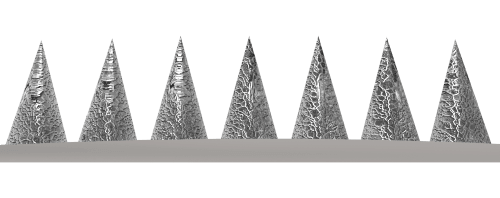
Rubberhog Original wheels use the SSG structured tooth pattern, consisting of extremely sharp conical tungsten-carbide cutting teeth arranged in a randomized pattern across the wheel surface.
This randomized tooth distribution helps prevent tracking during grinding, which allows operators to achieve excellent surface finishes on precision rubber rollers and elastomer components.
SSG structured teeth are particularly effective for:
  • Grinding softer elastomers and rubber compounds
  • Machines operating at lower surface speeds
  • Applications traditionally using vitrified stone wheels
  • Situations where consistent finish quality is critical
SSG wheels are identified by a three-digit coarseness designation, where larger numbers indicate coarser material removal and smaller numbers produce finer finishes.
Oliver original SSG coating
Extreme MCM Coating

Rubberhog Extreme – MCM Structured Tooth

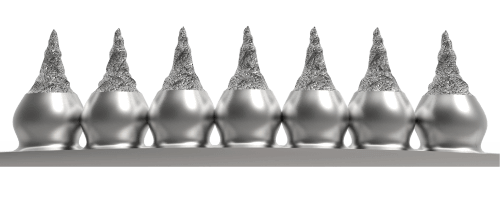
Rubberhog Extreme wheels use the MCM structured tooth pattern, featuring precisely formed tungsten-carbide teeth arranged in a controlled alternating left-right geometry.
This engineered structure creates a more open cutting pattern, which dramatically reduces:
  • Grinding heat
  • Smoke generation
  • Machine power consumption
  • Wheel loading and chatter
Because of its open structure, MCM is ideal for grinding hard rubber compounds, highly filled elastomers, and demanding production environments.
MCM structured teeth provide:
  • Longer service life
  • More aggressive stock removal
  • Reduced grinding temperatures
  • Stable cutting performance during continuous production grinding
Although optimized for harder materials, MCM wheels can still produce smooth surface finishes on softer materials when operated at higher surface speeds.
MCM coarseness grades are designated by two- or three-digit numbers, with larger numbers representing coarser cutting action.

Tungsten-Carbide Grit for Specialized Roll Grinding Applications

For certain specialized grinding applications, Rubberhog wheels can be produced using brazed tungsten-carbide grit surfaces.
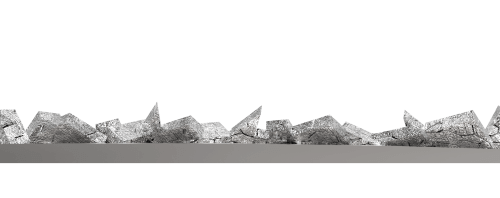
This design uses crushed carbide particles permanently bonded to the wheel body, creating an extremely rugged grinding surface suited for operations where structured teeth may not be ideal.
Carbide grit wheels are commonly used for:
  • Grinding narrow grooves in rubber rollers
  • Producing convex profiles or complex shapes
  • End trimming of rollers
  • Applications where the wheel may contact steel roller cores
Because the carbide grit structure is exceptionally durable, it provides high resistance to damage in demanding roll grinding environments.
Carbide grit sizes follow standard abrasive grading conventions, where:
  • Smaller grit numbers = coarser cutting
  • Larger grit numbers = finer finishes
Crushed Grit Coating

Coarseness Size

Selection of the coarseness size is primarily based on the hardness range of the material to be ground. Harder materials grind better with coarser wheels, while softer materials generally require finer wheels. If you must grind a wide range of material hardness with just a single wheel, select a general-purpose coarseness size appropriate for the range of hardness you will grind. For maximum effectiveness, Dual-Grit or Triple-Grit wheels are usually the best choice when grinding new products with overbuild. To help you make the best selection most easily and conveniently, the data collection forms for wheel ordering show the options and recommended coatings for various grinding applications.

Selecting the Correct Coarseness for Rubber Roller Grinding

Choosing the correct Rubberhog wheel coarseness primarily depends on the hardness of the elastomer being ground.
General guidelines include:
  • Harder materials: perform best with coarser wheels
  • Softer materials: generally require finer cutting structures
For operations grinding a wide range of rubber compounds, a general-purpose coarseness grade can provide balanced performance.
For new rollers with significant overbuild, Rubberhog Dual-Grit and Triple-Grit wheel designs often provide the most efficient grinding results by combining multiple cutting structures within a single wheel.

Rubberhog Design Center

Rubberhog wheels are custom-designed and produced to match your machine and product requirements. Selecting and ordering the optimum Rubberhog for your application requires gathering information about your grinding equipment, the type of grinding jobs you perform, and the materials which you grind. There are four primary aspects of wheel design to consider: Physical dimensions, wheel style, coating type, and coarseness grade.